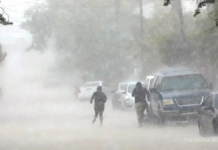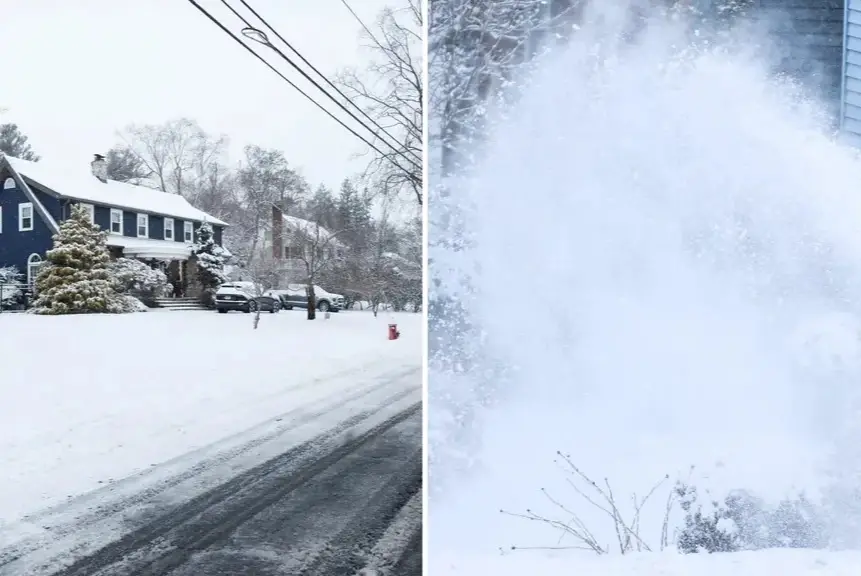

The northeastern United States, especially New York, Connecticut, and New Jersey, has been affected by an atypical winter storm known as Clipper Storm, or Alberta Clipper.
Snow accumulation reached 10 centimeters in New York City, while in parts of Long Island the figure climbed to 19 centimeters. In Connecticut, the snow level reached 22.8 centimeters. As a result, traffic on the roads suffered complications and traffic jams that affected residents.
Due to the strength of the winter storm, authorities at airports in the region, such as John F. Kennedy (JFK), reported the cancellation of 134 flights and the delay of 107. Across the United States, cancellations totaled 1,033 events and delays affected 17,701 trips due to this natural phenomenon.
The U.S. National Weather Service (NWS) reported that temperatures reached freezing, with highs of 25 degrees Fahrenheit inland and 32 degrees Fahrenheit along the coast. Visibility was reduced shortly after the storm began in the Manhattan, Brooklyn, Queens, Bronx, and Staten Island areas.
A winter storm known as a Clipper Storm, or Alberta Clipper, is a low-pressure system that moves rapidly through the atmosphere. It typically forms in Canada and moves toward the northeastern United States. This weather event is characterized by the influx of Arctic air and causes rapid drops in temperature. The phenomenon also generates winds and snowfall in the areas it passes through.
The NWS in New York noted that the system develops after the passage of cold fronts overnight. Lower-level pressure is moving in from the Ohio Valley, bringing cloud cover and snowfall in the afternoon and evening. Unlike other storms, the Clipper Storm is notable for its rapid movement, meaning its effects on the land occur quickly, blanketing cities in snow within hours.
Regarding Mexico, the center of a Clipper Storm never makes direct landfall. However, according to experts, the system’s passage over the eastern United States acts as a driving force for air masses. As it moves toward the Atlantic Ocean, the wind circulation draws air from the pole toward the southern part of the continent. Consequently, this process gives rise to the season’s cold fronts, such as the one on December 24, 2025.
Meanwhile, in the Gulf of Mexico, the air mass generates the “Norte” event, bringing northerly winds and high waves to the states of Tamaulipas and Veracruz. Similarly, the air masses that arrive after a Clipper passes cause sub-zero temperatures and frost in the mountain ranges of Chihuahua, Coahuila, and Durango. In central Mexico, the arrival of these air masses coincides with cold mornings.
Regarding precipitation, the phenomenon causes rain or sleet only in the higher elevations of the mountains of Sonora and Chihuahua. Finally, the Gulf Coast and the Isthmus of Tehuantepec experience wind gusts due to the pressure exerted by the system from the north.
According to specialists, these systems tend to occur more frequently during the Northern Hemisphere winter and depend on the position of the jet stream to descend toward southern latitudes.

Source: nmas