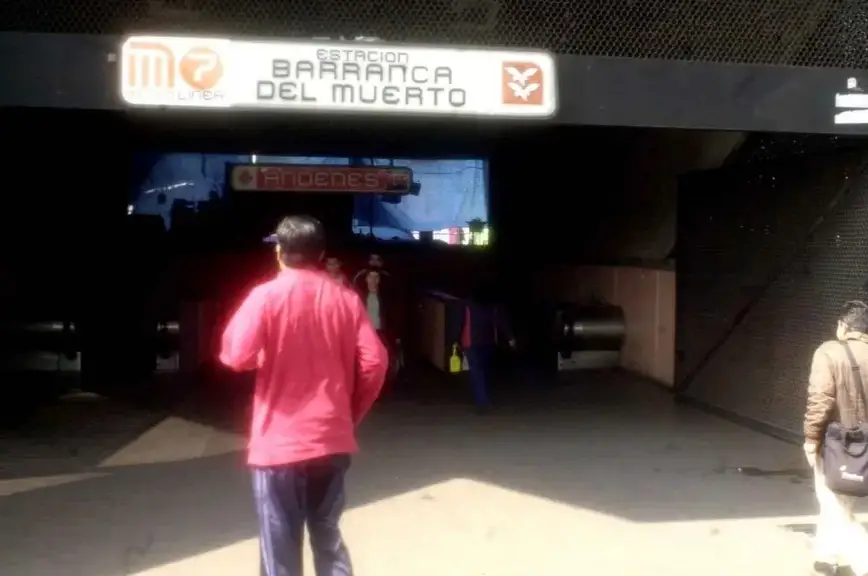

Barranca del Muerto Avenue, the Metro station, and the entire surrounding area are key points in the daily life of Mexico City (CDMX). Today, we see asphalt, bridges, and tall buildings, but the name reminds us of a very different reality.
Behind this famous site located in the south of CDMX lies a fascinating story that combines prehistoric geological phenomena and tragic episodes of the Mexican Revolution.
So, below we tell you why this area of the Mexican capital is called Barranca del Muerto (Ravine of the Dead).
Where does the “barranca” part of the name come from?
To understand the reason for the name Barranca del Muerto, we have to go back in time. The origin of the ravine dates back to a massive event that occurred in the south of the Valley of Mexico.
Approximately 17,200 years ago, the Xitle volcano, located in the Sierra del Ajusco mountain range, erupted. The earth movements unleashed by this volcanic activity caused a large fracture. The earth split open along a vast stretch, creating a system of ravines and gullies in the area, including the one with the grim name, Barranca del Muerto (Ravine of the Dead).
This ravine was an imposing geographical feature; its width is known to have been similar to that of the avenue today, and its depth exceeded 15 meters.
Why is it called Barranca del Muerto?
The name “del Muerto” (of the Dead) did not originate from geology, but from human conflict. Long after the eruption of Xitle, the town of Mixcoac, near the ravine, became a coveted site during the Mexican Revolution.
At that time, possession of Mixcoac was the object of ambition between two factions: the Carrancistas and the Zapatistas. Clashes between these forces were frequent and brutal.
These battles during the Revolution resulted in countless casualties, bodies that the victors chose to dispose of in the simplest way possible: by throwing many of the corpses into the ravine. Faced with the sheer number of dead bodies piled up in the abyss, the locals began to refer to the place as Barranca del Muerto (Ravine of the Dead).
The presence of so many abandoned bodies quickly fueled legends. Tales abounded among the residents, who recounted how the tormented souls of some of those dead terrified the inhabitants of the surrounding area. In this way, terror and tragedy solidified the name we still use today.
What happened to the ravine?
If you visit the area one day, you’ll notice that the 15-meter-deep depression no longer exists. Everything is flat, covered by pavement and urban development.
The fate of Barranca del Muerto changed drastically with the urban development of the capital. Starting in the 1940s, authorities began a landfill process to level the terrain.
They primarily used rubble, that is, construction materials and garbage, for the fill. Current studies indicate that the fill material reaches depths of up to 20 meters, according to Alberto Vázquez of the Institute of Geology at the National Autonomous University of Mexico (UNAM), in an interview with N+.
Due to this urban transformation, nothing remains of the original ravine that existed at the beginning of the 20th century. On top of this fill, authorities built an urban area, a baseball field, a cemetery, and the now-famous intersection of Avenida Revolución and Barranca del Muerto.

Source: nmas