
Pedestrian Deaths Continue to Rise in Nuevo León Amid Speeding and Unsafe Urban Design
The morning of July 26 began like any other for Juan Rodríguez and his wife, Karla Calvillo. She was preparing breakfast when she left home on a simple errand: to buy tortillas.
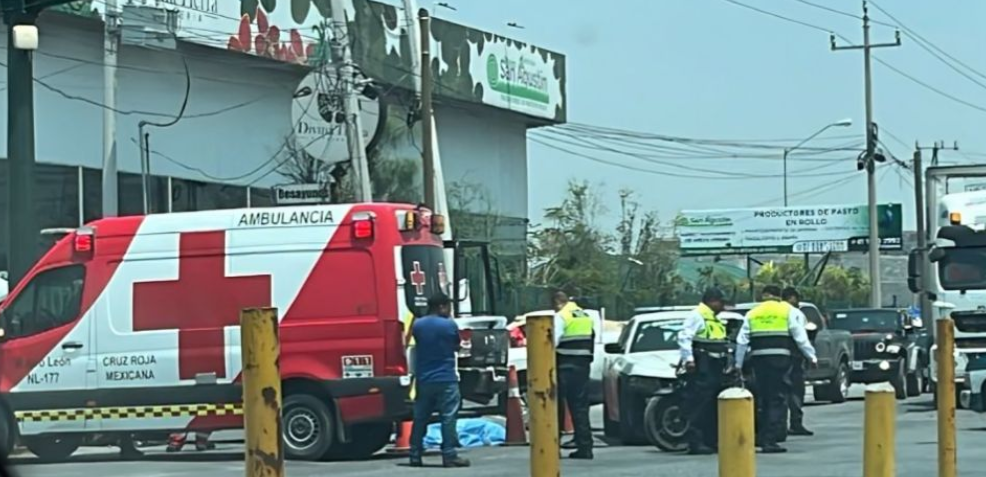
Minutes later, she was killed after being struck by a vehicle while waiting on a median to cross Cuauhtémoc Avenue in Santa Catarina.
“She already had the food cooking on the stove and told me, ‘I’ll be right back, I’m going to buy tortillas.’ Where we live, there’s a median you wait on before crossing the street, and that’s where she was standing, waiting for traffic to pass. That’s where she was hit,” Juan Rodríguez recalled in an interview with ABC Noticias.
That day, Karla, 42, was waiting for the opportunity to cross when a Chevrolet Spark veered off its path after the driver lost control.
According to the initial investigation, the vehicle was traveling southbound on Cuauhtémoc Avenue, allegedly at excessive speed, driven by a 27-year-old man who authorities believe was under the influence of alcohol.
The vehicle struck a light pole on the median, knocking it down before hitting Karla, then crossed into the opposite lanes, where it finally came to a stop.
Karla’s death is not an isolated case. It adds to the 713 pedestrian accidents recorded in Nuevo León between January and June 2026, according to statistics from the Citizen Observatory for Mobility and Road Safety (OCISEVI).
The organization recorded 398 pedestrian accidents during the first quarter of the year and 315 during the second. Of those incidents, 394 people were injured and 20 lost their lives.
April was the deadliest month, with seven fatalities. The incidents were reported in Monterrey, Apodaca, San Pedro, García, Escobedo, Guadalupe, Juárez, Pesquería, San Nicolás, Santa Catarina, and Santiago.
The Deadliest Type of Traffic Accident
Pedestrian accidents account for only 8 to 12 percent of all urban traffic incidents, according to OCISEVI data compiled from the Nuevo León Health Secretariat, INEGI, and the Mexican Red Cross.
The vast majority of crashes—between 85 and 90 percent—are collisions between vehicles. However, pedestrian accidents are the deadliest, accounting for nearly half of all traffic-related deaths.
One out of every two people killed on metropolitan streets is a pedestrian.
Speed is the main reason for that high fatality rate. According to specialists, striking a pedestrian at more than 50 kilometers per hour carries an 85 percent probability of causing death.
On high-speed avenues where vehicles regularly exceed that limit, pedestrians rarely survive an impact.
The problem has existed for years.
Between 2020 and 2024, INEGI recorded 7,952 pedestrian accidents in Nuevo León, averaging 4.35 incidents per day, or roughly one pedestrian struck every five hours.
The figures increased steadily after the pandemic. In 2020, during the COVID-19 restrictions, there were 1,346 cases. By 2023, the number had risen to 1,874, the highest figure of the five-year period.
In 2024, the most recent year with complete data, 1,619 pedestrian accidents were recorded.
Previous years paint an even more alarming picture. Between 2015 and 2019, before the pandemic, authorities documented 9,984 pedestrian accidents, averaging 5.47 incidents per day.
Unsafe Infrastructure
According to experts, the root of the problem lies in urban design: Monterrey was built for cars.
Regulations require sidewalks to be at least 1.5 meters wide, but a study by the Faculty of Architecture at the Autonomous University of Nuevo León (UANL) found that in the metropolitan outskirts—including Apodaca, Escobedo, Juárez, and García—only 35 percent of sidewalks meet that standard.
The rest measure between 60 and 90 centimeters, forcing pedestrians to walk in the roadway.
In industrial areas, sidewalks often disappear entirely. Up to 40 percent of the routes leading to public transportation stops lack sidewalks altogether.
A joint study by Tecnológico de Monterrey, the Massachusetts Institute of Technology (MIT), and the Indian Institute of Technology Bombay concluded that pedestrian infrastructure deteriorates significantly within a 300 to 500-meter radius of Metro stations.
More than 60 percent of pedestrian accidents occur on high-speed avenues such as Gonzalitos, Constitución, Morones Prieto, Fidel Velázquez, Eloy Cavazos, and Miguel Alemán.
Authorities and mobility advocates disagree on how to reduce fatalities.
Traditional traffic engineering favors pedestrian bridges and underpasses to separate pedestrians from traffic.
Mobility organizations such as Pueblo Bicicletero argue that streets should instead be redesigned at ground level with raised crosswalks, pedestrian-friendly traffic signals, and lower speed limits to restore the legal priority of pedestrians.
Statistics challenge the effectiveness of pedestrian bridges. According to OCISEVI, more than 65 percent of pedestrian deaths on major avenues occur within 300 meters of a pedestrian bridge.
High stairways and steep ramps discourage older adults and people with disabilities from using them, leading many to cross directly through traffic moving at speeds exceeding 80 kilometers per hour.
Luisa Peresbarbosa, director of Mobility and Accessibility (Movac), attributes the high number of pedestrian accidents to several factors but identifies speed as the most dangerous.
“Speed is the most critical risk factor. Striking a person at more than 50 kilometers per hour carries an 85 percent chance of causing death. It is practically a guaranteed fatality,” she warned.
She argued that reducing pedestrian fatalities requires speed management through safer streets, wider sidewalks, bicycle lanes, fewer traffic lanes, speed cameras, and automated enforcement systems.
She also stated that urban planning continues to prioritize automobiles over pedestrians.
“We are worse off today than we were ten years ago. Drivers are increasingly impatient,” she concluded.
July Brings More Victims
The 713 pedestrian accidents recorded during the first half of the year were only part of the story. July added more victims, many of them among the most vulnerable pedestrians.
On July 4, Mariel Romero Díaz, a 16-year-old student at UANL High School No. 9 and a flag football player, died after being struck while crossing the intersection of Raúl Rangel Frías and Paseo de los Leones in the Cumbres neighborhood.
The driver fled the scene without stopping to help.
In mid-July, Amalia Lizeth, just 8 years old, was visiting Monterrey and walking with her aunt to a pharmacy when she was struck on Aztlán Avenue—first by one vehicle and then by a second whose driver also fled.
She did not survive.
On July 12, Esperanza, 72, suffered severe injuries after being hit by a private employee transport bus in the 15 de Mayo neighborhood.
On July 26, the list claimed another victim: Karla Calvillo.
She had simply left her home to buy tortillas.
The 27-year-old driver who struck her remains in police custody while authorities investigate whether he was speeding and driving under the influence of alcohol.
The meal Karla had been preparing was still on the stove.
Source: abcnoticias