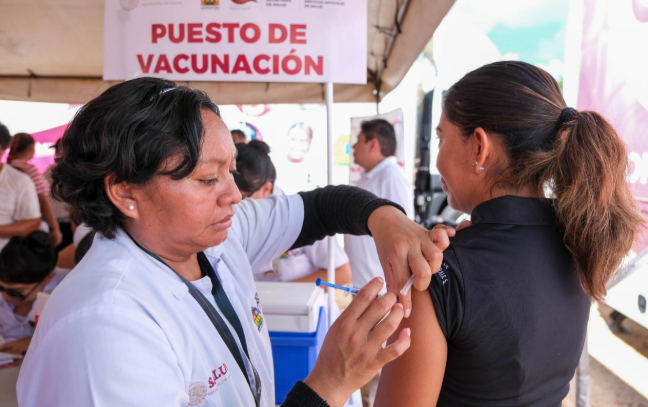

Respiratory illnesses have increased across the Yucatán Peninsula. According to the weekly report from the Ministry of Health, the week from July 27 to August 3 recorded the largest weekly increase in both influenza and COVID-19.
During that period, the region confirmed 20 new influenza cases and 20 new COVID-19 cases, marking the largest weekly increase for both diseases in 2026. The situation shows that the summer season has become the period of greatest activity for these viruses, contrary to the perception that respiratory illnesses occur mainly during winter.
The figures show that both viruses have maintained an upward trend as the vacation period progresses, encouraged by increased mobility, family gatherings, travel, and recreational activities typical of this time of year.
Yucatán Leads in Influenza Cases
The report highlights that influenza continues to show steady growth throughout the Yucatán Peninsula. By epidemiological week 30, the region had accumulated 159 confirmed cases, distributed as follows:
- Yucatán: 96 cases
- Quintana Roo: 55 cases
- Campeche: 8 cases
Weekly activity has shown a steady increase since May. By the previous week, the peninsula had accumulated 139 cases. The increase to 159 cases in week 30 represented 20 new diagnoses, the highest weekly increase recorded during the year.
One of the most relevant findings is the geographical concentration of influenza cases. At the national level, Yucatán ranks first, accounting for 26.8% of confirmed infections, followed by Quintana Roo with 15.4%.
Together with Mexico City, Tabasco, and Sinaloa, these five states account for 60.3% of all cases recorded during the interseasonal period.
The high proportion of cases in Yucatán and Quintana Roo has kept the Yucatán Peninsula under epidemiological surveillance, while health authorities continue strengthening early detection and monitoring respiratory viruses to identify possible changes in their circulation.
COVID-19 Cases Also Increasing
COVID-19 has shown a similar pattern. Infections have maintained an upward trend for several weeks, and during the latest reporting period the region also recorded its largest weekly increase.
So far, the peninsula has accumulated 55 confirmed COVID-19 cases:
- Yucatán: 29 cases
- Quintana Roo: 18 cases
- Campeche: 8 cases
During the latest week, the total increased from 35 to 55 cases, meaning there were 20 new infections, the highest weekly figure recorded in the region throughout 2026.
Although the number of cases remains lower than during the first years of the pandemic, the trend confirms that the virus continues circulating among the population and remains significantly active during the summer.
Which Variants Are Predominant?
In addition to the increase in cases, epidemiological reports indicate that the variants currently circulating continue to contribute to the transmission of both COVID-19 and influenza.
For COVID-19, the JN.1 variant continues to account for most detected infections in the peninsula. This lineage, which descends from the Omicron family, is characterized by its high transmissibility, allowing it to remain predominant for several months.
Although it generally causes mild or moderate symptoms in most patients, its ability to spread easily helps explain the sustained increase in cases observed in recent weeks.
Regarding influenza, epidemiological surveillance identifies influenza type B and influenza A(H3N2) as the variants with the greatest circulation.
While Quintana Roo continues to report a predominance of influenza type B, Yucatán and Campeche have greater circulation of A(H3N2). This strain has a high transmission capacity and can represent a greater risk of complications for older adults, people with chronic illnesses, pregnant women, and immunocompromised patients.
Influenza type B, meanwhile, continues to circulate significantly in Quintana Roo and can cause symptoms such as fever, sore throat, nasal congestion, cough, muscle aches, and general discomfort.
Like other forms of the virus, it spreads through respiratory droplets released when an infected person speaks, coughs, or sneezes.
The simultaneous presence of COVID-19 JN.1 and influenza B and A(H3N2) helps explain the increase in infections recorded in recent weeks and confirms that summer has become the period of greatest circulation for both viruses this year.
Increase Despite the Absence of Cold Weather
The figures show an unusual pattern compared with previous years, when the highest activity of these diseases was mainly associated with the fall and winter months.
However, this year both influenza and COVID-19 have continued to increase precisely during the summer, a season characterized by heavy tourist activity, school vacations, and greater social interaction.
Although most patients experience mild illness, specialists remind the public that both viruses continue to represent a risk for vulnerable groups. They recommend not letting their guard down and seeking medical evaluation when respiratory symptoms persist or become worse.
National Influenza and COVID-19 Situation
Although Mexico is no longer experiencing the infection levels seen during the most critical years of the pandemic, epidemiological surveillance shows that COVID-19 and influenza continue to circulate throughout the country.
The latest Ministry of Health report confirms that both diseases remain present and that preventive measures should continue to be followed, especially among vulnerable populations.
In the case of COVID-19, 1,586 people have tested positive for SARS-CoV-2 during 2026. So far, the Ministry of Health has confirmed 36 deaths associated with COVID-19.
The cumulative case-fatality rate based on the epidemiological week of symptom onset remains at 2%, considerably lower than during the most severe stages of the health emergency. However, the virus continues to represent a risk for people with chronic illnesses, older adults, and those with weakened immune systems.
Mexico City has the highest number of confirmed COVID-19 cases, accounting for 33.7% of the national total. It is followed by:
- State of Mexico: 9.8%
- Hidalgo: 8.3%
- Puebla: 5.3%
- Jalisco: 4.6%
Together, these states account for more than six out of every ten COVID-19 infections recorded this year.
Regarding deaths, Hidalgo has the highest proportion, accounting for one-quarter of confirmed COVID-19 deaths in the country. It is followed by Mexico City, State of Mexico, and Oaxaca.
Other states, including Chihuahua, Guanajuato, Jalisco, Nuevo León, Tlaxcala, Aguascalientes, Chiapas, Michoacán, Puebla, Veracruz, and Zacatecas, have also reported deaths, although in smaller numbers.
Regarding influenza, the 2026 interseasonal period has accumulated 358 laboratory-confirmed cases. The Ministry of Health reports five influenza-related deaths during this period.
The cumulative positivity rate stands at 4.1%, meaning approximately four out of every 100 samples analyzed test positive for the virus.
The predominant subtype nationwide is influenza A(H3N2), responsible for 48% of confirmed cases. It is followed by:
- Influenza B: 45%
- Influenza A: 4.7%
- Influenza A(H1N1): 2.2%
The population groups with the highest incidence of influenza include adults aged 95 and older and those between 90 and 94 years old.
There is also notable impact among children aged 1 to 4 and people between 80 and 89 years old, confirming that the youngest and oldest populations remain among the most vulnerable to respiratory infections.
States With the Most Influenza Cases
| State | Percentage of Cases |
|---|---|
| Yucatán | 26.8% |
| Quintana Roo | 15.4% |
| Mexico City | 7.3% |
| Tabasco | 6.4% |
| Sinaloa | 4.5% |
| Other states | 39.7% |
Source: msn