
Fentanyl trafficking has found a foothold in the state of Veracruz: with the alleged protection of high-ranking state government officials, police officers, military personnel and members of the National Guard, the drug is brought into the ports and then exported to the United States.
In the case of Veracruz — a land of gangs and gunmen — the port terminals involved in the trafficking are Veracruz, whose port terminal is one of the most important in the world; followed by Coatzacoalcos, and the list also includes the port of Tuxpan, another key point for shipping the chemical drug that has killed more than one hundred thousand Americans over the past three years.
There is also the fishing port of Alvarado, where small aircraft arriving from Central and South America drop cocaine into the waters of the Papaloapan River. Fishermen then collect the packages in boats and store them in warehouses before handing them over to operators of various cartels.
According to information consulted from the DEA, the U.S. Drug Enforcement Administration, fentanyl trafficking as well as migrant trafficking from Central America occurs with official protection: high-ranking state officials, police chiefs, military personnel and members of the National Guard are reportedly named in files because of the explosive trafficking of synthetic drugs through the port terminals. Federal authorities are also allegedly involved.
UNSTOPPABLE ORGANIZED CRIME
A land of caciques, gangs and kingpins, the state of Veracruz remains in the hands of organized crime. So far, no one has been able to stop the mafia bosses; on the contrary, they have become increasingly entrenched to such an extent that they now control business and political life in the more than two hundred municipalities across the state.
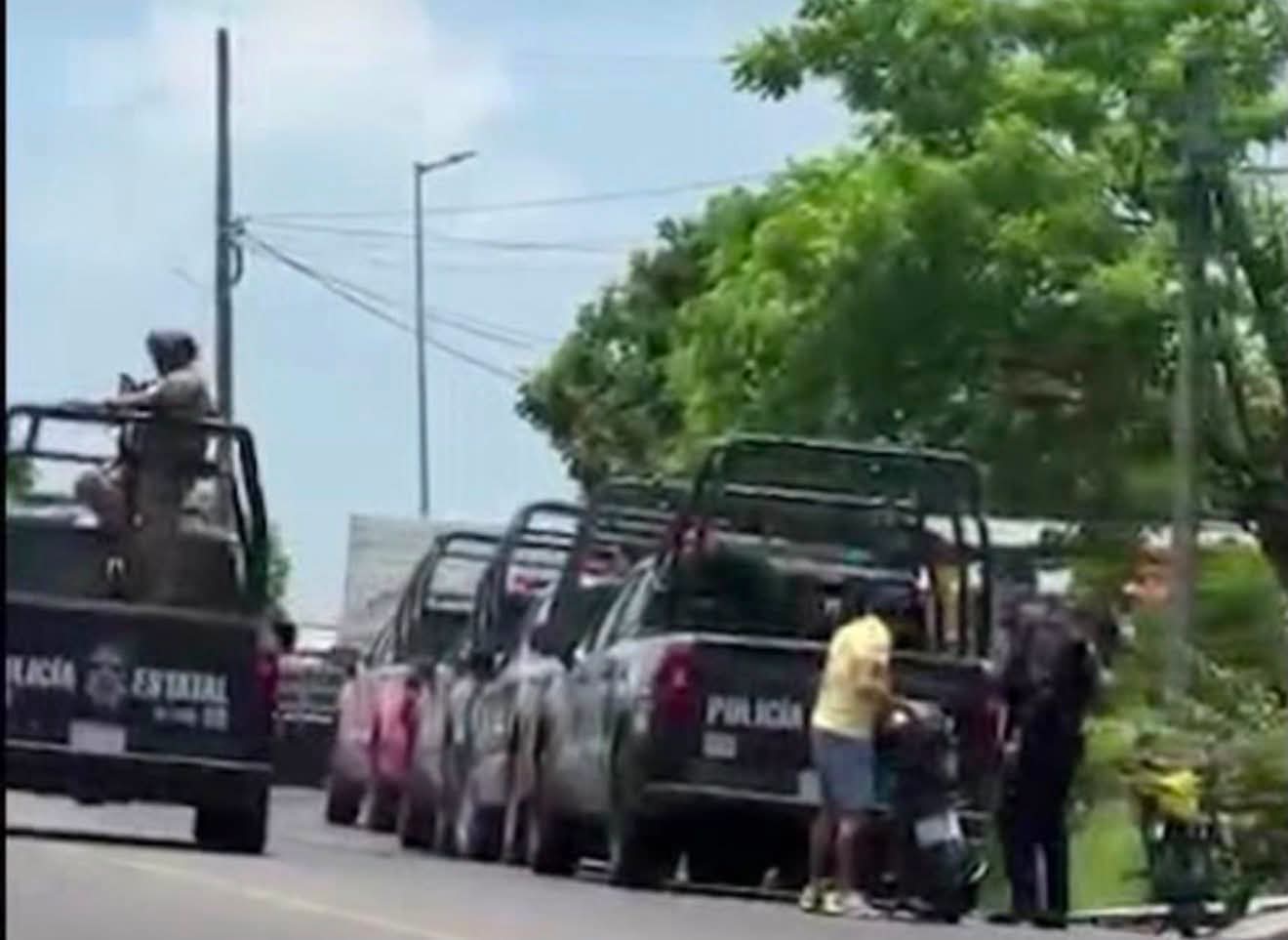
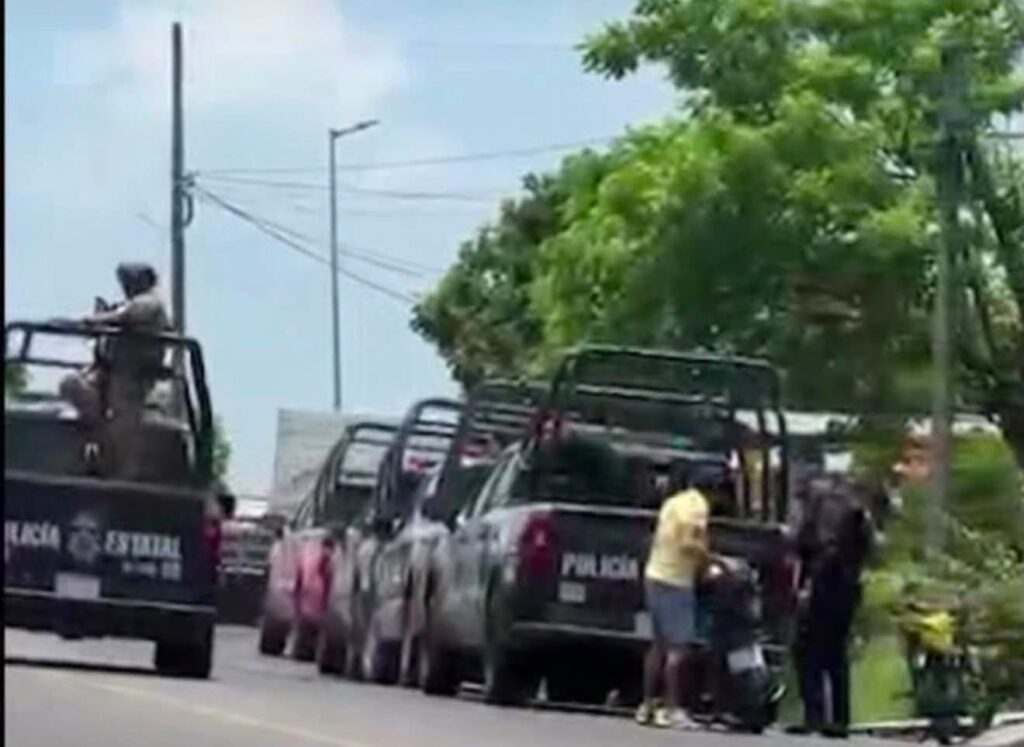
Violence is widespread, despite the increased presence of military personnel, marines and the National Guard; however, drug cartels, particularly Sinaloa, Jalisco and Northeast, continue to openly fight for territorial control, which is crucial because of the state’s geographic location, allowing large shipments to move through the ports of Tuxpan, Veracruz and Coatzacoalcos, considered the mafia’s preferred maritime terminals.
According to information from the DEA, Veracruz’s ports are key points for the trafficking of fentanyl to the United States.
They are also used to receive chemical precursors arriving from Asia. This is why the U.S. government became concerned and asked the Mexican government to militarize all the country’s ports several years ago. And that is what happened.
Washington’s orders were carried out during the final part of López Obrador’s administration. Despite this, trafficking of synthetic drugs continues to thrive, as does illicit fuel trafficking.
During the government of Cuitláhuac García Jiménez in Veracruz, not only did criminal groups such as the Sinaloa Cartel and the Jalisco New Generation Cartel operate with impunity: the territory also became a refuge for criminal figures who committed crimes in Chiapas, Querétaro, the State of Mexico and other states, and who continue to operate now under the government of Rocío Nahle.
With the alleged support of state authorities, criminals involved in drug trafficking from the State of Mexico have established themselves in southern Veracruz and are already spreading terror and violence throughout that part of the state.
These are individuals who reportedly own ranches with landing strips and possess airplanes and helicopters; they allegedly carry out kidnappings and intimidation, with their power reinforced by the support of officials from the Veracruz Prosecutor’s Office and investigative police officers.
One example is Álvaro Sánchez Sánchez and/or Felipe Sánchez Sánchez, known in the criminal underworld as “La Tía,” “Pollo” and “Tartamudo,” who was also identified by authorities in the State of Mexico and by the Attorney General’s Office as a major drug trafficker who amassed a considerable fortune through drug trafficking, bringing drugs into Mexico from Central America through the state of Chiapas.
According to the information consulted, Sánchez Sánchez led, until his death, a criminal cell based in the State of Mexico but also exercising significant control in Guerrero, Michoacán, Morelos and Veracruz, particularly in the municipalities of Jesús Carranza and other areas of the southern region.
Alongside Álvaro Sánchez and/or Felipe Sánchez worked — and now operates independently — Lorenzo Sánchez Sánchez, his brother, who goes by the nickname “Lencho” or “El Señor de los Caballos.”
The latter took control of the organization following the murder of Álvaro Sánchez, who was killed along with his wife and other relatives on April 18, 2022, in Querétaro.
Nothing is known, so far, about the command that carried out the attack; authorities seized ten thousand head of high-bred cattle, houses, weapons and cash from him. His distribution network was extensive. He allegedly moved one ton of drugs to the United States every week. He also supplied weapons to several cartels.
THE SÁNCHEZ CARTEL, IMPUNITY
Alleged kingpin Álvaro Sánchez, known as “El Tartamudo,” operated in the state of Veracruz. His associates reportedly own a ranch in the municipality of Oluta, near Acayucan, equipped with a landing strip and helipad. In addition, local residents consulted reportedly claim that it also has warehouses used to store drugs.
Despite this, Veracruz authorities have allegedly turned a blind eye, even though Governor Cuitláhuac García maintains that his government does not tolerate organized crime.
Intelligence reports from authorities in the State of Mexico referred to Álvaro Sánchez as the head of “a cell dedicated to drug trafficking,” but the criminal organizational chart presented in those reports indicates that what “El Tartamudo” headed was actually a full-fledged cartel. On April 18, 2022, the alleged kingpin was killed at his “Los Tres Hermanos” ranch in Querétaro.
It was an entire enterprise — or several — made up mostly of relatives, many of whom appeared on social media showing off expensive clothing, luxury vehicles and parties featuring famous musical groups.
CRIMINAL ORGANIZATIONAL CHART
Álvaro Sánchez Sánchez is dead, but the cartel he left to relatives and associates is reportedly directed from the State of Mexico by several figures, including Gustavo Ortiz, “El Lobo,” and Orfelina Rebollar Castelán. In command, but in the second position, is Lorenzo Sánchez Sánchez, Álvaro Sánchez’s brother; he is known in the criminal underworld as “El Señor de los Caballos.”
Below Lorenzo Sánchez is a list of nine operators: Juan Carlos Cienfuegos Vera, Felipe Valero, Sergio Macedo, David Valero, Alexander León, Luis Alberto Benítez, José Manuel Benítez, Óscar Vallejo and Mónica Luna Ángeles.
The organization reportedly has extensive contacts in Central and South America for sourcing drugs, as well as a distribution network in the United States for transferring money, consisting of nine people.
Some of the names include Dexi Jiménez, Santa Guadalupe Guevara and Moisés Jiménez, among others who have reportedly been identified by authorities in the State of Mexico and the Attorney General’s Office.
The reports state that the criminal organization has contacts in Honduras, from where it obtains drugs. The network also consists of nine operators.
The cartel reportedly owns hotels, restaurants, warehouses and a transportation network and, according to investigations, the group’s leader brings drugs through Tapachula, Chiapas, and southern Veracruz.
For several years, this alleged kingpin, who strangely went unnoticed by authorities — it is claimed that the Veracruz Prosecutor’s Office has been bought off — has operated from Oluta, but throughout southern Veracruz he reportedly owns properties: ranches, houses and an extensive network of operators for receiving drug shipments.
It is claimed that shipments usually arrive in private airplanes and helicopters, as his ranches reportedly have landing strips and helipads.
And the worst part is that he reportedly operates with complete impunity, allegedly using large sums of money to buy off investigative police officers and high-ranking officials in the Veracruz Prosecutor’s Office, which, incidentally, is deeply discredited.
This is how drug trafficking allegedly flourishes in Veracruz, with the protection of state officials. And this is how impunity allegedly operates under the government of Rocío Nahle, where drug trafficking and fuel smuggling enjoy impunity.
Source: mexicodailypost