
“El Cinco Varos”: The Man Who Turned Begging Into a Way of Life
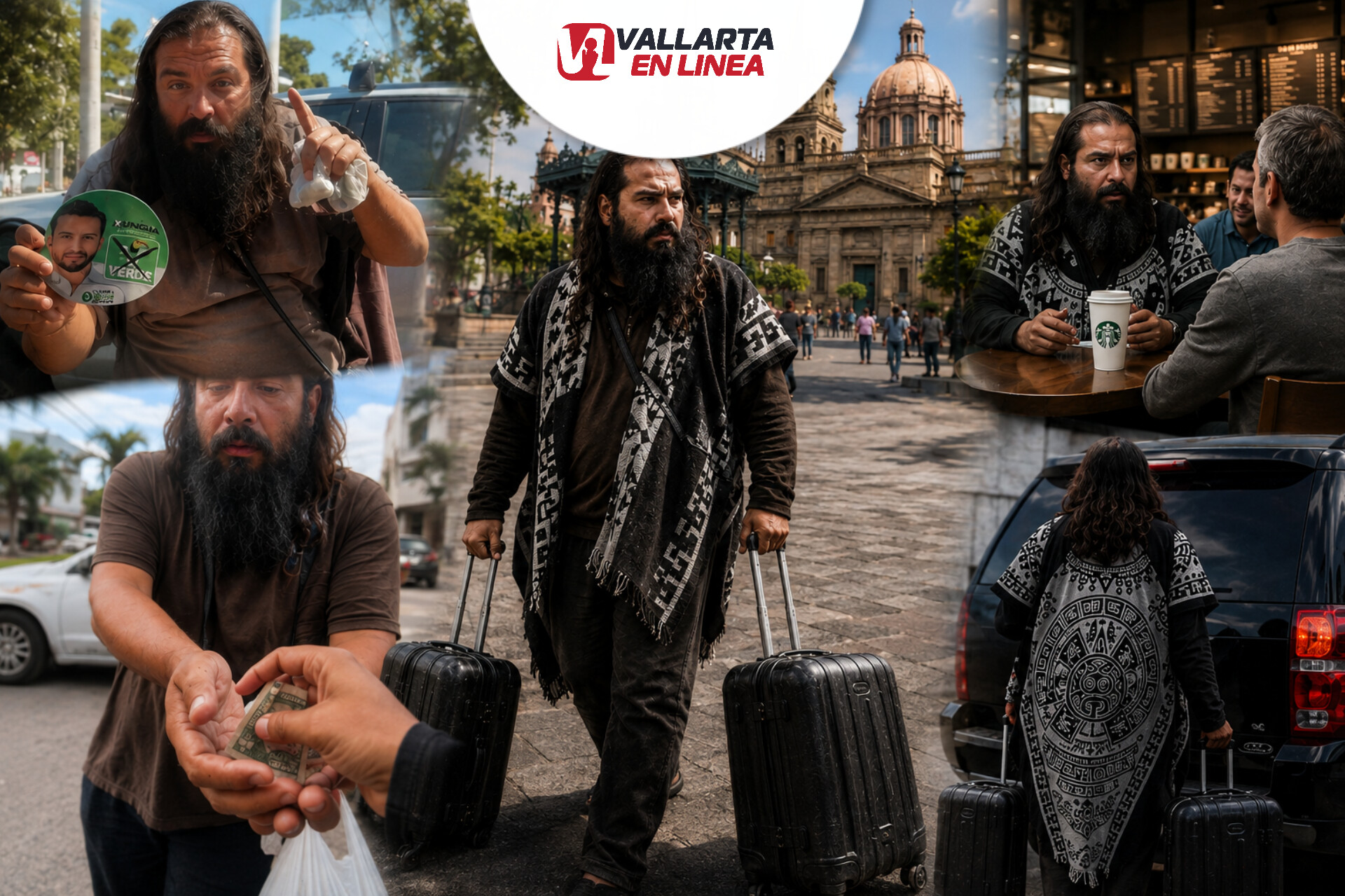
For years, he was one of those characters practically every resident of Puerto Vallarta eventually recognized. Long hair, a thick beard, a peculiar ability to approach strangers, and a request that became his personal trademark: five pesos, some coins, or any contribution.
That is where the nickname “El Cinco Varos” came from, a man who took asking for alms to another level and practically turned it into a profession: a kind of professional traveling beggar, walking through streets, intersections, businesses, and public spaces while approaching people in both Spanish and English.
His case is particularly unusual because he was not simply someone who occasionally asked for a coin. “El Cinco Varos” made begging a lifestyle choice, developing a consistent routine over the years to request small contributions from thousands of people.
And that is precisely where the formula lies: five pesos may seem like almost nothing to the person giving them, but five pesos multiplied by thousands of people can become a significant amount of money.
His daily life also turned him into an even more famous character in Puerto Vallarta. On several occasions, he was seen having coffee at Starbucks while using his laptop, something that generated all kinds of comments from people who, minutes or hours earlier, may have encountered him asking for money at an intersection.

He was also seen and photographed boarding commercial flights like any other passenger, going to a membership-based gym, and carrying out completely ordinary activities that contrasted with the image many people might have formed when seeing him asking for coins on the street.
This is precisely what made “El Cinco Varos” such an unusual case: he is not generally known as a homeless person, but rather as a character who found in asking for money a permanent way to generate income and maintain his lifestyle.
His unusual occupation even caused him problems. In Puerto Vallarta, he was involved in arguments, verbal altercations, and some confrontations when people refused to give him money or when interactions became heated.
But times change, and so do markets, and now even “El Cinco Varos” has decided to change locations.
The character moved to Guadalajara, where he has already been spotted carrying out exactly the same activity that made him famous in Puerto Vallarta: approaching people in public spaces, starting conversations, and asking them for money.
A publication in Guadalajara even showed him inside an establishment counting a considerable amount of coins and claimed that he makes deposits of up to 2,000 pesos per day, allegedly from the contributions he collects during his rounds.
The publication immediately sparked a discussion among people who already knew him and those who were just discovering the character who had been an urban celebrity in Puerto Vallarta for years.
Some users defended his activity with a simple argument: he asks, but each person freely decides whether to give him money. “He doesn’t steal; it’s your free will whether you give him anything or not,” one person wrote. Another user even admitted to having given him his famous five pesos and humorously reacted to discovering the extent of his unusual activity.
Other comments said that he simply turned his ability to ask for money into his own “business venture.”
One person also claimed to be a relative and provided another part of his story. They explained that he belongs to the Bautista family, lost his parents, and went through difficult personal circumstances. They also asked people to show greater empathy toward him and remembered that behind the character known on the streets there is also a personal story.
His name is reportedly Daniel Bautista, although for thousands of people in Puerto Vallarta, his real identity ultimately became much simpler: “El Cinco Varos.”
For years, he turned asking for money into something highly unusual. He learned where to do it, how to approach people, and even how to communicate with foreigners. One coin here, five pesos there, and another contribution a few meters farther. What individually represents practically nothing takes on a different dimension when the request is repeated thousands of times.
Now that routine will continue, but more than 300 kilometers away.
Thus, “El Cinco Varos” has, for now, closed his professional traveling-begging operations in Puerto Vallarta and moved his unusual activity to Guadalajara, where he has already begun attracting attention for exactly the same reasons that made him famous in Vallarta.
Even he appears to have reached the point of looking for new horizons. With the decline in tourism and economic activity affecting Puerto Vallarta, the character packed his things and moved to a new market.
Because while some businesses close their doors and other entrepreneurs search for new cities, El Cinco Varos also decided to geographically diversify his operations.
In Vallarta, he remains part of the city’s peculiar contemporary urban folklore. In Guadalajara, meanwhile, a new chapter is beginning.
He changed cities, but not his occupation: five pesos, one coin, or whatever you would like to contribute.
The “5 Varos”: Who is Puerto Vallarta’s popular and beloved beggar?

Daniel Batista, better known as “5 Varos,” is a character who has become part of Puerto Vallarta’s cultural imagination. His presence on the streets, asking for money and sharing reflections on different topics through social media, has made him a familiar face to both locals and tourists.
However, his life is more complex than it may appear. Although he normally asks for money in Puerto Vallarta, he was seen in Guadalajara at the end of February 2025, but by March of the same year he had been seen again on the streets of Puerto Vallarta.
Social Media
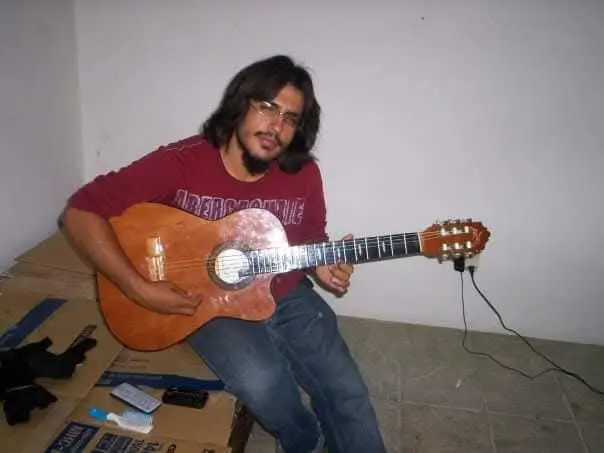
On his social media accounts, Batista describes himself as “homeless” and shares messages reflecting his view of the world, some philosophical in tone and others containing elements of social criticism. He is known to enjoy playing the guitar and practicing karate.
One of his Facebook posts reads: “I am homeless, I would say bohemian; I would say suicidal, but that encourages… better I’ll just leave.”
Among “5 Varos’” publications are reflections on human rights, exercise as a way to lose weight, and complaints against government institutions.

He has also worked as a digital content creator, collaborating with restaurants in Puerto Vallarta to promote them and sharing content about his daily life.
What Is Daniel Batista’s Family Background?
Over the years, there has been speculation about his past. Unofficial information circulating on social media indicates that he was born in Guadalajara and that he worked on the streets selling candy with his mother from a young age.
It is said that his family moved to Puerto Vallarta after his parents separated and that he continued his economic activities to survive. People who knew him when he was young claim that he attended ETI secondary school in Puerto Vallarta and that, despite the difficulties he faced, he managed to complete a degree in Business Administration.
There are also accounts indicating that Batista does not live entirely on the streets. Some people claim that he rented an apartment in the Versalles neighborhood and that, despite his nomadic lifestyle, he maintains a certain degree of stability.
Nevertheless, “5 Varos’” eccentric behavior and rejection of a conventional lifestyle have generated divided opinions. While some see him as a person who chooses his own path, others consider him someone who avoids formal employment.
The reported death of his mother marked a turning point in his life, according to accounts from people who knew him. From that point onward, his situation reportedly became more uncertain, and his presence on the streets became more frequent.
Some friends have suggested that his behavior could be related to antisocial personality disorder, although there is no official confirmation of this.
The story of “5 Varos” has generated empathy among some sectors of the population, who see him as a reflection of the difficulties faced by many vulnerable people.
Others, however, perceive him as someone who has chosen an alternative lifestyle and has found in begging a means of subsistence.
Source: vallartaenlinea / tribunadelabahia